How we regained 14 hours a week in a transport company
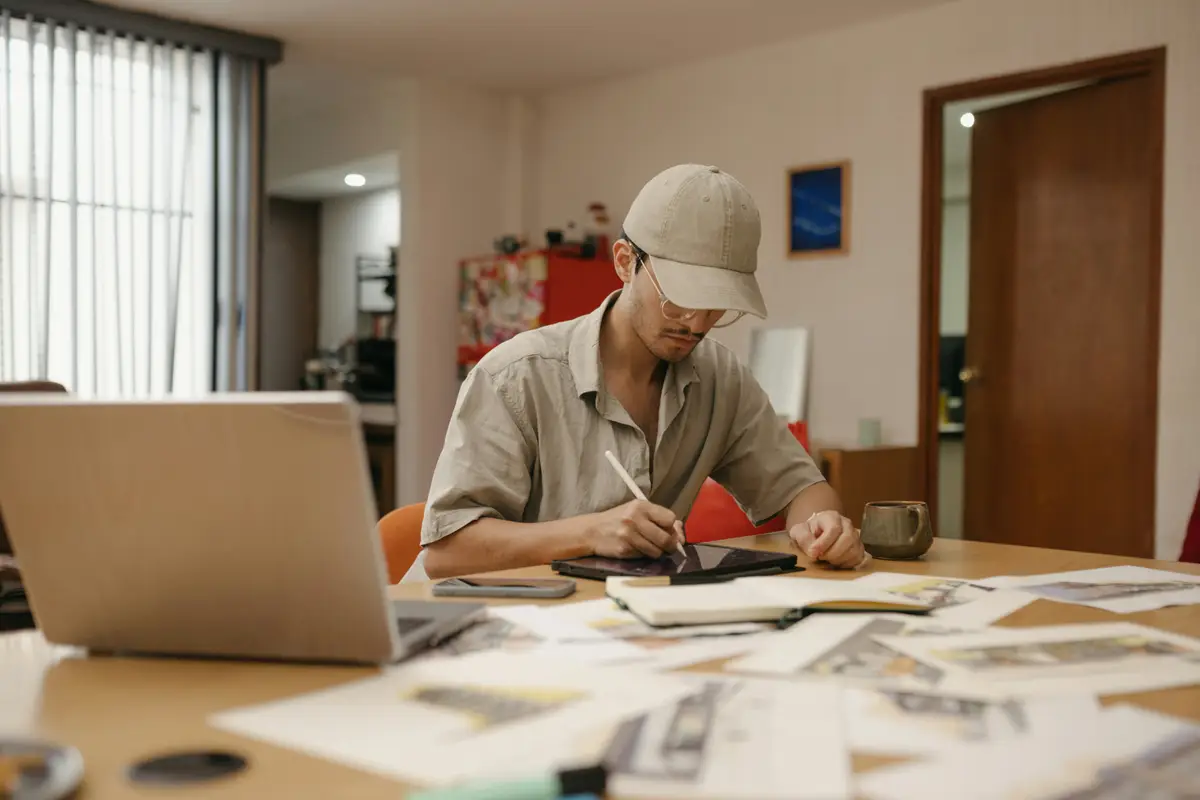
Marek has been running his transport company in Radom since 2017 and until recently worked 12 hours a day. Although his fleet consists of 17 sets, he was still personally answering calls from drivers at 11:00 PM and manually transcribing fuel invoices. We show how, thanks to three specific changes, Marek regained 14.3 hours each week and finally has free Saturdays.
Paperwork mess is a time thief
In March 2024, we sat down with Marek in his office on Chrobrego Street to calculate where most of his energy was escaping. It turned out that Marek spent 3.5 hours a day just verifying logbooks and checking if GPS data matched what the drivers entered in their reports. He had 17 vehicles, and every driver reported differently – one sent SMS messages, another called, and a third left crumpled papers on the desk once every two weeks. This generated a massive information chaos that Marek had to straighten out in the evenings, long after his children were asleep.
Analysis showed that 47% of the time spent on administration resulted from errors in data transcription. Marek used three different Excel files that were not linked to each other. When the fuel price or a driver's rate changed, he had to update each file separately. This wasn't strategic work; it was fire fighting that he unconsciously ignited himself through a lack of a systemic approach. We count concrete profits, so we quickly established that every hour of Marek's work on these tables cost the company real money that he wasn't earning during that time by acquiring new orders from the transport exchange.
The problem did not lie with the people, but in the lack of a clear document flow path. The drivers didn't know exactly what the boss required of them, so they did it their own way, with the lowest cost of effort. In Radom and the surrounding areas, competition in transport is high, so wasting 14 hours a week on correcting typos in Excel is a luxury Marek could no longer afford. We decided to cut it once and for all by introducing rules that work without constant owner supervision.
Marek didn't need a new office worker. He needed a system that would stop stealing his evenings.
One sheet instead of three separate worlds
The first step was a brutal simplification of tools. We threw out the old files and created one main Operational Register in the Microsoft 365 cloud, accessible to Marek and his accountant, Mrs. Grażyna. The sheet was designed so that after entering the tractor's registration number, the system automatically retrieves its assigned average fuel consumption and fuel card number. Previously, Marek had to check this in a paper binder, which took him about 4-6 minutes for each invoice. With 17 cars and a dozen or so refueling stops per week, the savings were immediately visible.
We introduced automatic conditional formatting. If a driver refueled more than the norm by more than 3.2%, the cell in Excel turned red. Marek no longer had to browse hundreds of items looking for anomalies – the system itself showed him where intervention was needed. This allowed him to reduce the time spent analyzing fuel consumption from 90 minutes to just 12 minutes a day. Without any fluff: this was pure mathematics applied in practice, freeing the boss's head from constant mental calculations.
Additionally, we integrated the sheet with a simple Google form that drivers fill out after each unloading. The form contains only 4 fields: order number, odometer reading, amount of fuel refueled, and a photo of the delivery note (WZ). Sending this takes the driver 45 seconds at the parking lot. The data goes straight into Marek's Excel. As a result, on Monday morning Marek has a complete set of information from the entire week, instead of waiting until Wednesday for everyone to return to the base in Radom and hand in physical documents.

The instruction that silenced late-night phone calls
The second pillar of change was the creation of a 'Driver Procedure Card'. This was not a boring 20-page work regulation that nobody reads. We created a one-page laminated sheet that ended up in each of the 17 vehicles. The manual contained specific answers to the 5 most common questions drivers called Marek about after hours. What to do when a fuel card doesn't work? Where to send a photo of a damaged tire? How to report a loading delay in Germany? Each point had an assigned phone number for service or a step-by-step instruction.
Marek was afraid that drivers would see this as bureaucracy, but the effect was the opposite. Piotr, who has been driving for Marek for 5 years, admitted in May 2024 that he finally knows what to do when the boss doesn't pick up because he's at lunch. The number of calls to the owner dropped from 23 to 4 per week. This gave Marek peace of mind. A business for years, not for a moment, is built precisely through such a simple cutting of the umbilical cord between the boss and every minor operational problem. Marek stopped being a dispatcher and became a manager.
We also introduced a rule that all urgent matters are reported via a dedicated group on a messenger app, rather than by phone. This allows Marek to see the problem but respond to it in a designated time block, rather than during a conversation with a contractor. In June 2024, we recorded only one instance where a driver had to call Marek directly at night – and it concerned an actual engine failure on a route near Berlin, not a question about an unloading address.
Delegating is not abandoning duties
Many business owners in Radom are afraid of delegating because they think nobody will do it as well as they do. Marek had the same conviction. We broke this by appointing one of the most experienced drivers, Mr. Robert, to the role of 'Fleet Leader'. Robert received a salary supplement of 650 PLN and took over the monitoring of technical inspection dates and oil changes for the 17 sets. It is Robert who now schedules service visits at the workshop on Warszawska Street and ensures that the fire extinguishers in the cars have valid certification.
Marek initially checked on Robert every two days, but after a month he saw that everything was working perfectly. Robert feels appreciated, and Marek gained another 3 hours a week that he previously spent calling mechanics and checking registration documents. This is Knowledge Capital in practice – using the potential of people already in the company to relieve the leader. Robert knows these trucks better than anyone else, so he naturally catches faults faster than Marek from behind a desk.
Thanks to this process, Marek could finally focus on analyzing margins on individual routes. It turned out that routes to the Benelux countries, although they seemed profitable, generated 12% more service costs than domestic routes. Without those recovered 14 hours, Marek would never have found the time to sit down with a calculator and check this. The decision to limit trips to Belgium in favor of regular lines to Wrocław improved the company's profitability by 4.7% in just one quarter.
Delegating is not giving away power. It is buying yourself time to think about profits.
Results you can feel in your wallet and at home
Summarizing our activities in July 2024, Marek regained exactly 14 hours and 20 minutes per week. On a monthly basis, that's nearly 60 hours of free time. What did he do with them? First, he finally went to a local football team's match with his son without checking his phone every 5 minutes. Second, he implemented a new bonus system for drivers based on fuel savings, which in August 2024 reduced refueling costs by over 4,200 PLN net while maintaining the same mileage.
These methods, proven in the Radom reality, showed that you don't need expensive IT systems for tens of thousands of zlotys to organize a medium-sized transport company. Free Google tools, one Excel sheet with a few formulas, and a change in communication habits were enough. Marek is no longer a slave to his 17 trucks. He is an owner who knows that the business works even when he turns off his phone after 5:00 PM. This is the standard we strive for in every one of our consulting projects.
The most important lesson for Marek was realizing that his time is the most expensive resource in the company. If the boss is dealing with matters that a senior driver or a simple computer automation can handle, the company stands still. Today, Knowledge Capital is helping Marek prepare for succession – we are slowly introducing his nephew into management processes using the same instructions we created in March. A peaceful retirement starts with order in the documents today.